

15 May 2026
HKU Researchers Partner with Local Schools to Install Nest Boxes for Critically Endangered Cockatoos
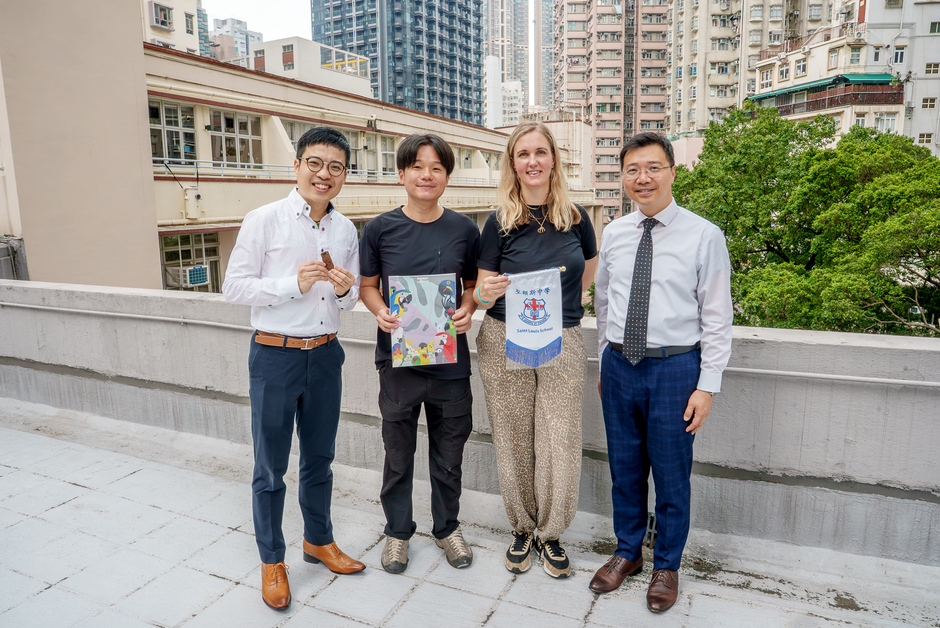
From left to right: St. Louis School Teacher Winster Wong, Arborist and Designer Harry Wong, HKU Postdoctoral Researcher Dr. Astrid Andersson, and St. Louis School Principal Dr. Yick
Researchers from the School of Biological Sciences have launched a collaborative conservation initiative with local schools to support the survival of the critically endangered Yellow-crested Cockatoo (Cacatua sulphurea). The project involves the installation of specially designed artificial nest boxes on school grounds or in public parks to provide critical breeding sites for the species.
Hong Kong is home to approximately 200 Yellow-crested Cockatoos—roughly 10% of the world’s remaining population. Despite being an introduced species, the local population serves as a vital genetic reservoir as native populations in Indonesia and East Timor face rapid decline due to poaching and habitat loss. Researchers at HKU School of Biological Sciences have been studying Hong Kong’s Yellow-crested Cockatoos for 10 years, tracking their population trends, breeding behaviour, and genetics.
“The loss of over 60% of natural tree hollows in Hong Kong due to typhoons and pruning has created a housing crisis for these birds,” said Dr. Astrid Andersson, the project lead. “By partnering with local schools, we are providing safe havens for breeding so we don’t lose this globally important urban population.”
To date, four nest boxes have been installed at three schools: The ISF Academy and St. Louis School at their campuses in Pok Fu Lam and Sai Ying Pun (respectively), and Quarry Bay School (ESF) – for which the box has been installed in Victoria Park.
“This initiative is a great opportunity to engage the next generation in urban conservation and hands-on conservation action. The students can help make and install the nest boxes, and learn about urban wildlife design,” said Harry Wong – arborist, designer, and collaborator on this project.
Key Project Highlights:
- Sustainable Nesting Solutions: The nest boxes are modified from Australian prototypes to withstand Hong Kong’s humidity and include internal camera systems for non-invasive monitoring.
- Community Outreach: Students will participate in citizen science, observing the birds’ breeding behaviour and collecting data on clutch size, incubation period, fledgling success, etc., for this rarely studied species.
- Genetic Reservoir: Protecting these urban birds ensures a "backup population" that could one day assist in restoring the species to its native range.
This initiative demonstrates that even in a densely urbanised metropolis, collaborative efforts between academia and the community can provide a lifeline for species on the brink of extinction.
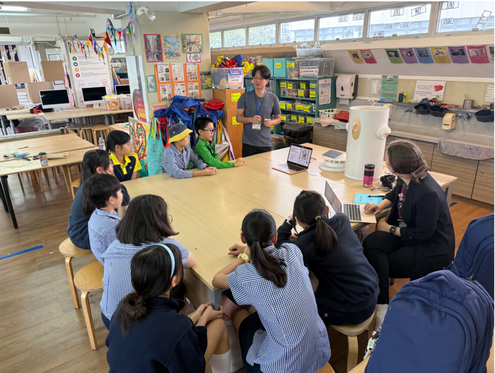
Designer Harry Wong conducts a workshop for students at Quarry Bay School about urban wildlife design and nest box construction. Photo: Astrid Andersson
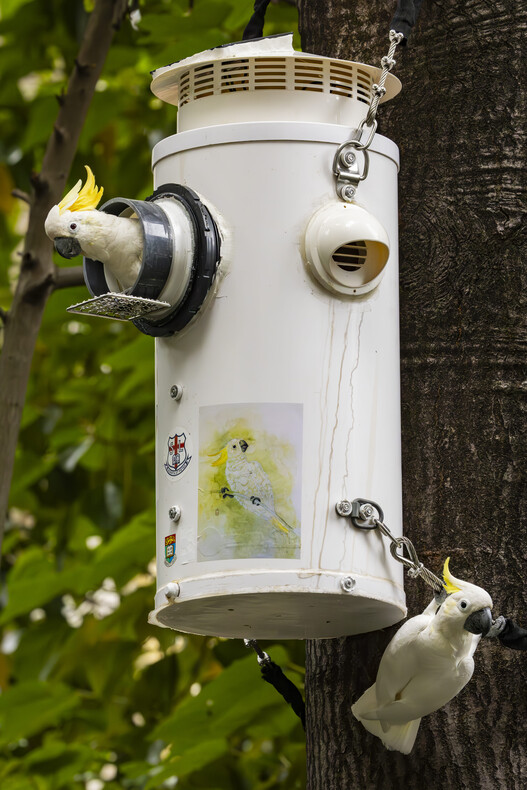
A cockatoo pair using the nest box installed at St. Louis School campus in Sai Ying Pun. Photo: Winster Wong

Quarry Bay School Green Team (Paarush, Aaron P, Alfa, Caitlyn, and Aaron W) at Victoria Park. Photo: Ceri Hill
You may also be interested in

07 Sep 2026
07 Sep 2026
28 Aug 2026
21 Aug 2026
02 Aug 2026
29 Jul 2026