

28 Jul 2026
From Common Core to Published Research: An Unexpected First-Year Discovery
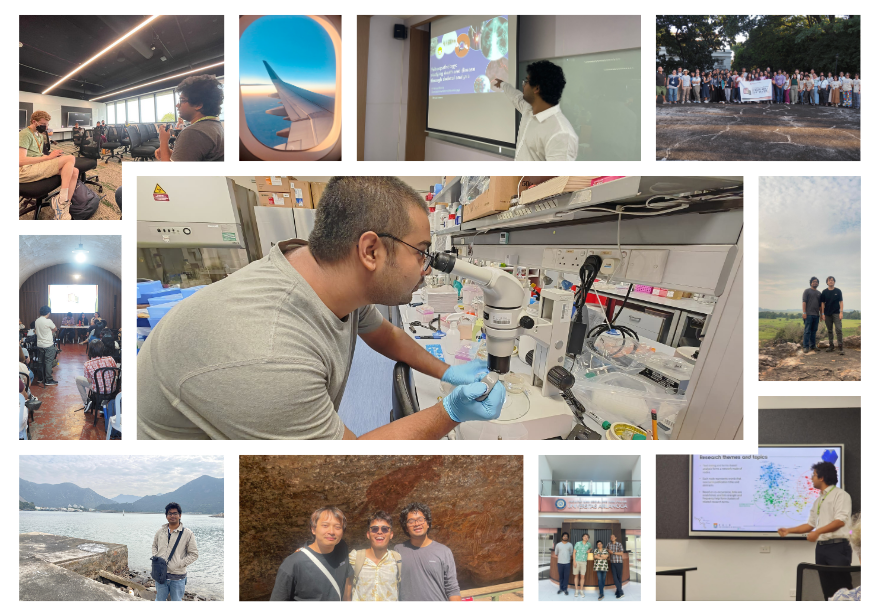
At HKU Science, students spend their first year exploring different subjects before choosing a major in their second year. For Tatfeef HAQUE, that period of exploration took an unexpected turn: a Common Core course led him into the world of academic research before he had even begun his second year.
Tatfeef first encountered biological anthropology through CCST9081 All You’ve Ever Wanted to Know About Humans, taught by Dr Michael RIVERA. Drawing on genetics, anatomical science, forensic science, evolutionary biology, behavioural ecology and history, the course explores human evolution and what it means to be human.
“It influenced me profoundly,” Tatfeef recalled. He soon found himself reading papers on bioarchaeology, anatomy, osteology, human evolution and population genetics.
From Curiosity to Publication
Recognising his interest, Dr Rivera introduced Tatfeef to opportunities beyond the classroom.
“Dr Rivera identified my interest and gave me opportunities in outreach and academic research, which deepened my interest in research and the dissemination of scientific knowledge,” Tatfeef said.
He joined an interdisciplinary project examining cultural attitudes and ethical considerations surrounding scientific work with human remains. His role involved coding testimonies from researchers, analysing the cultural and professional contexts surrounding their work, and discussing the broader themes with Dr Rivera.
“The existing literature has not contended with local attitudes enough,” Tatfeef explained, noting that local perspectives can sometimes be overlooked in scientific practice.
The work led to Tatfeef co-authoring two peer-reviewed papers in the International Journal of Osteoarchaeology—an unusual achievement for a student who had yet to begin his second year.
Learning Beyond the Classroom
Tatfeef’s research journey also took him to Universitas Airlangga in Indonesia, where he engaged with anthropologists, researchers and students and gained insight into how another academic community approaches research, teaching and mentorship.
“The way their research community carried out research and teaching informed much of my ideas of what good research ethics and academic community ideals might look like,” he said.
The experience deepened his understanding of research in practice, from analysing evidence and collaborating across disciplines to considering ethical questions and communicating scientific knowledge responsibly. He also had opportunities to present his work at international conferences, exchange ideas with other academics and gain new perspectives on his research.
Exploring a New Scientific Direction
These experiences also helped Tatfeef explore where his scientific interests might lead. He is considering majors in Biological Sciences and Molecular Biology and, before beginning his third year, has already joined Professor Chaogu ZHENG’s laboratory in the School of Biological Sciences.
There, he is investigating the mechanisms of axonal regeneration, including how injured neurons recognise and reconnect with the correct targets, as well as the molecular mechanisms behind a novel neuroregeneration phenomenon
Although his current laboratory work differs from his earlier research in biological anthropology, both experiences are driven by the same curiosity and willingness to explore science across disciplinary boundaries.
What began as a Common Core course did more than help Tatfeef decide what to study. It brought him into the world of research much earlier than expected—and helped him begin discovering what kind of scientist he hopes to become.
Learn more about the research projects:
Emic–Etic Perspectives on Southeast Asian Cultural Attitudes Surrounding Human Remains
You may also be interested in

08 Aug 2026
05 May 2026

10 Apr 2026

26 Mar 2026
17 Mar 2026
10 Mar 2026