

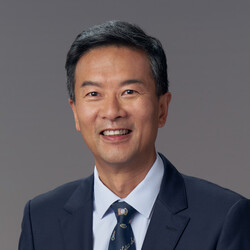
Qiang ZHOU
Dean of Science
Chair Professor
School of Biological Sciences
People as the Core Asset
Our community is the core of the Faculty of Science, and we remain dedicated to recruiting world-class scholars who bring fresh and diverse perspectives to our mission.
Recently, we welcomed 16 outstanding academics from across the scientific spectrum, and more experts are expected to join us in the near future. Some highlights of our recent recruitment efforts include the appointments of several Chair Professors: Professor Nicolas DAUPHAS in the Department of Earth and Planetary Sciences; 2010 Fields Medalist Professor Bo Châu NGÔ and Professor Hà Văn VŨ in the Department of Mathematics; and Nobel Laureate Sir Andre GEIM, Nobel Laureate Professor Ferenc KRAUSZ, and Professor Bing ZHANG in the Department of Physics. Their presence on our campus reflects our commitment to excellence at the highest level and serves as a genuine inspiration for our students and staff. We believe that by investing in our people, we are enabling the scientific breakthroughs of tomorrow.
Embracing the Era of Intelligence
The recent period has been a transformative time for the Faculty as we fully engage with the era of artificial intelligence (AI). The rapid evolution of AI is no longer just a technological backdrop but a central force for innovation within our departments. We have proactively integrated AI into both university education and administrative management by using these tools to refine assessment and tailor learning to the unique needs of every student. To further strengthen this effort, we have also injected extra funding to support AI-related teaching and learning initiatives through the Faculty of Science Teaching Innovation Fund. To further advance AI-driven research and innovation, the Faculty organised an “AI for Science Mini-Symposium” in early 2026, offering an excellent opportunity to share insights and foster collaborations at the intersection of AI and basic science. As we navigate a complex technological and geopolitical landscape, our focus remains on promoting the resilience of HKU Science to ensure that we stay at the forefront of global scientific progress.
Research Excellence and Funding Success
The strength of our research is evident in our success in securing competitive funding even as the environment becomes more demanding. Our proposal of the Centre of Functional Materials for Energy and Sustainability (CFMES) has been officially approved for admission to the third InnoHK research cluster, SEAM@InnoHK, which focuses on sustainable development, energy, advanced manufacturing, and materials.
We have maintained a strong position by winning substantial grants across several prestigious schemes. Notably, the official renewal of the State Key Laboratory of Synthetic Chemistry and the official establishment of the State Key Laboratory of Optical Quantum Materials further solidify our leadership in frontier scientific domains. Our colleagues have secured multiple Collaborative Research Fund (CRF) awards, achieved success with the Research Impact Fund (RIF), and excelled in the RAISe+ Scheme. Furthermore, our researchers were awarded the National Natural Science Foundation of China/ Research Grants Council (RGC) Joint Research Scheme and RGC Research Fellowships, which highlight the excellence and competitiveness of our academic staff.
Another major milestone is the establishment of the Hong Kong Institute for Astronomy and Astrophysics (HKIAA), now an affiliated Institute of our Faculty. As a premier hub dedicated to advancing astrophysics in Hong Kong and beyond, HKIAA strengthens our research landscape and underscores the transformative potential of our work.
Our commitment to research is also recognised through the numerous international and local honours our scholars receive. Many of our staff continue to appear on the Clarivate Highly Cited Researchers and the world’s top scientists’ lists. Our academics across various fields are regularly elected as Fellows of major local and global scientific societies, ensuring that our work helps shape the global scientific narrative.
Advancing Science Education
Our academic programmes continue to attract the world’s elite young talent. The Science Master Class (BSc&MRes) and BSc&LLB programmes maintain their strong reputations and admit students who are ready to tackle complex global challenges. In the latest intake of our BSc programme, we saw a strong reference among students for fundamental subjects such as mathematics and physics, suggesting a renewed interest in the core pillars of science.
We have seen remarkable expansion at the postgraduate level. Taught Postgraduate (TPG) programmes, including new offerings such as the MSc in Chemical Technologies for Health and Materials and the MSc in Integrative Marine Ecology and Conservation, have proven highly successful and attracted strong interest. Our Research Postgraduate (RPG) community has also grown substantially. The academic calibre of our new cohort of postgraduate researchers remains outstanding, with approximately one-third hailing from the world’s top 100 universities.
Interdisciplinary Innovation and Outreach
The growth of interdisciplinary units established in collaboration with our partner Faculties has created vital hubs for collective innovation. The School of Computing and Data Science (SCDS), the School of Innovation (I-School), and the School of Biomedical Engineering (SBME) have become incubators for collaboration. These schools help bridge the gap between pure science and practical application, ensuring that our research leads to real-world solutions. By working across traditional boundaries, we are preparing our students for an increasingly interconnected professional world.
Beyond our research, we are committed to promoting scientific literacy and engaging with the wider community. The Faculty has grown its digital presence on platforms such as YouTube and Instagram to make scientific knowledge more accessible. Alongside our bi-monthly e-newsletter, this third issue of our annual publication, Science Sparks, serves to highlight the major achievements and milestones of our Faculty. Our outreach also focuses on the next generation through initiatives like the Junior Science Institute (JSI) and the TouchStart Science Summer Programme, which give young learners their first experience of scientific inquiry.
Strengthening Partnerships and Looking Ahead
As a global Faculty, our strength lies in meaningful connections that bring together people, ideas, and institutions. We continue to deepen partnerships with leading universities and research centres, both locally and internationally, advancing joint research and academic exchange. At the same time, we are actively reconnecting with distinguished alumni and engaging graduates who have excelled as entrepreneurs to ensure that their experience can be translated into mentorship and career opportunities for our students.
Looking ahead, having completed the Research Assessment Exercise (RAE) 2026, we await the results with confidence and a clear sense of our strategic direction. Building on this foundation, we will continue to prioritise strategic hiring to attract and retain outstanding scholars, while fostering interdisciplinary collaboration to address complex global challenges. We are also exploring the development of dual bachelor’s degree programmes with prestigious institutions in the Chinese Mainland, broadening our academic offerings and enhancing our contributions to the nation’s scientific and technological development. Supported by the Tech Landmark Development Project, which will provide state-of-the-art facilities for the next generation of research and innovation, we remain committed to being an inclusive and vibrant intellectual community for scholars from around the world.
I warmly invite you to join us in shaping a future in which science plays a leading role in advancing knowledge and improving society.
Qiang ZHOU
Dean of Science
Chair Professor
School of Biological Sciences
Dean of Science
Chair Professor
School of Biological Sciences
Key Milestones and Achievements of the Faculty of Science 2025-2026
 | New Talents: Welcomed 16 new professorial staff across a wide range of disciplines, including Biological Sciences, Chemistry, Earth and Planetary Sciences, Mathematics, and Physics, strengthening our academic expertise and research capacity. | |
 | Global Recognition: 6 scholars ranked among the top 100 scientists worldwide in their respective fields by Research.com; 9 scholars were named to Clarivate Analytics’ Highly Cited Researchers 2025 list, reflecting exceptional research influence and impact; Professor Ferenc KRAUSZ (Physics) was elected as an international member of US National Academy of Sciences; Professor Xuhua HE (Mathematics) was elected as a member of the Hong Kong Academy of Sciences; Professor Dong LI (Mathematics) was named a fellow of the American Mathematical Society; Professor Binzheng ZHANG (Earth and Planetary Sciences) and Professor Zhiwen ZHANG (Mathematics) secured the highly competitive RGC Research Fellow Scheme (RFS) for 2025/26. | |
 | Achievements in Research: Secured 4 Collaborative Research Fund (CRF) awards, out of only 13 funded projects at HKU, totalling over HK$20 million; obtained a HK$4.16 million grant from the Research Impact Fund (RIF) 2025/26 exercise, along with further funding awarded by the ITC RAISe+ scheme; the renewal of the State Key Laboratory of Synthetic Chemistry and the official establishment of the State Key Laboratory of Optical Quantum Materials, and the Centre of Functional Materials for Energy and Sustainability (CFMES) under SEAM@InnoHK. | |
 | Interdisciplinary Collaboration: Supported the successful establishment and operation of new interdisciplinary Schools, including the School of Computing and Data Science (SCDS), the School of Innovation (I-School), and the School of Biomedical Engineering (SBME). | |
 | Undergraduate Admission Intake: Our BSc programme attracted applicants with the strongest academic credentials among pure science programmes at local universities; our flagship dual-degree programmes also continued to draw top-tier talent; the BSc & MRes programme admitted 39 students, with Best 5 HKDSE scores ranging from 32 to 42.5, IB scores from 42 to 45, and GCE A-level/IAL results from 4A* to 5A*; the BSc & LLB programme admitted 25 students, with Best 6 HKDSE scores ranging from 31.5 to 42, IB scores from 42 to 44, and GCE A-level/IAL results of 4A*. | |
 | Postgraduate Student Populations: Research Postgraduate (RPG) student population increased by 16.5%; Taught Postgraduate (TPG) intake rose by 32%, expanding our advanced training and research community. | |
 | Global Mobility and Exchange: Facilitated outgoing exchange/ visiting study for 145 students and welcomed 106 incoming exchange/ visiting students, enriching cross-cultural learning and international partnerships. |