

29 Jul 2026
From Wood Chips to Courtroom Evidence: How HKU Scientists Helped Crack an Illegal Agarwood Case
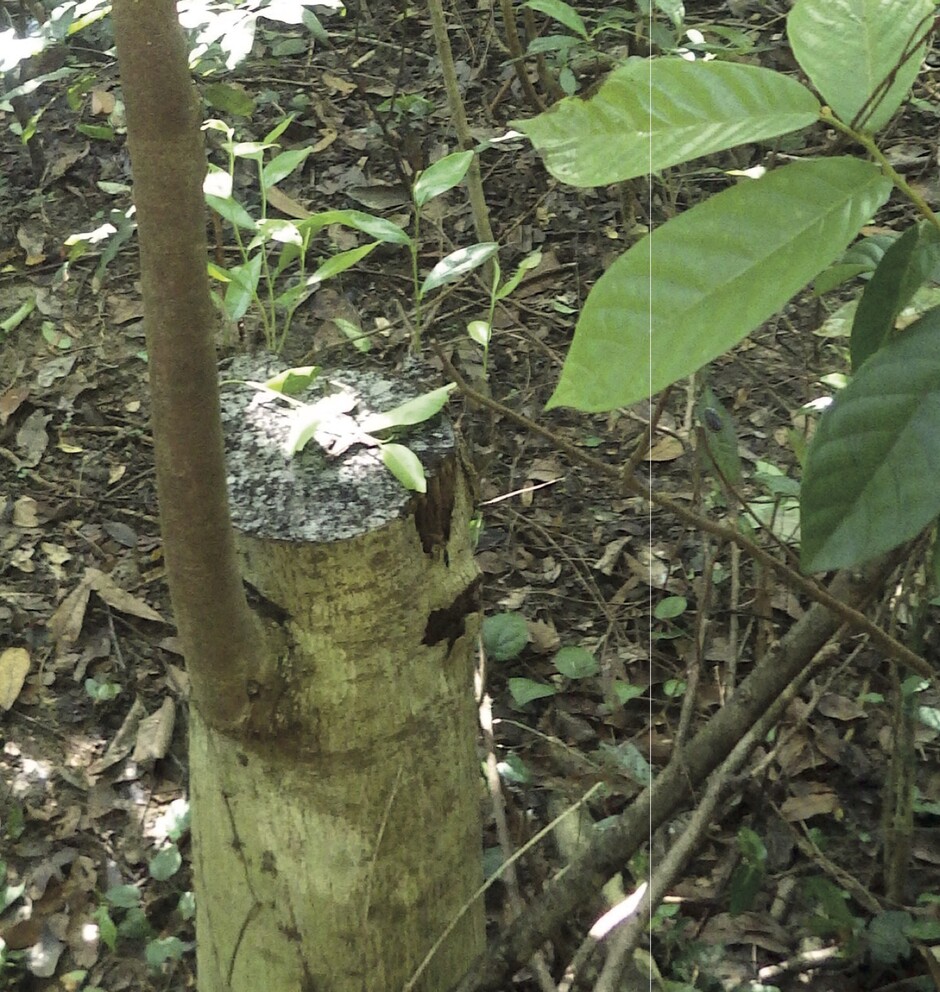
A few tiny plant fragments found on suspects’ clothing became the scientific link between an illegal tree-felling scene and the people accused of carrying it out.
Incense trees (Aquilaria sinensis) are part of Hong Kong’s natural heritage, but they are also a target for illegal harvesting. When a tree is damaged or infected, it may produce a dark, fragrant resin as part of its natural defence response. Over time, resin-infused wood can form agarwood, a highly prized material used in incense, perfume and traditional medicine. Because only some trees contain valuable agarwood, poachers may cut into or fell wild trees to find the resin-rich wood. Its high market value has made wild incense trees particularly vulnerable to illegal harvesting across Asia, including in Hong Kong.
A recent study led by Professor Juha Merilä from the Conservation Forensics Laboratory in the School of Biological Sciences at The University of Hong Kong (HKU), along with collaborators from the Agriculture, Fisheries and Conservation Department, shows how modern DNA technology can turn even minute plant fragments into powerful forensic evidence.
The case began after authorities arrested suspects in connection with the illegal felling of incense trees on Lamma Island. Investigators recovered tiny pieces of plant material from clothing and personal belongings. To the eye, these fragments offered little information. The challenge for the scientists was much harder than simply asking, “Is this from an incense tree?” They wanted to know whether the fragments could be traced back to a particular tree at the crime scene.
The HKU researchers first used DNA sequencing to identify which fragments came from Aquilaria sinensis. They then applied whole-genome resequencing, a method that examines genetic differences across a large part of an organism’s DNA. In simple terms, the team compared the genetic “fingerprint” of the wood particles with samples taken from illegally harvested trees.
The result was striking. Several plant particles recovered from the suspects matched one specific illegally felled incense tree. This was possible even though the evidence consisted of very small, aged and poorly preserved pieces of wood. The finding demonstrates that plant DNA can retain enough information for investigators to move beyond identifying a species and, in some cases, trace evidence back to an individual tree.
The DNA evidence helped support the prosecution of nine suspects, who received prison sentences of 30 to 50 months. The case was also among the first wildlife-crime prosecutions in Hong Kong to apply the Organised and Serious Crimes Ordinance, resulting in enhanced sentences. For the researchers, the significance extends beyond a single prosecution: it provides a practical model for using science to strengthen enforcement against illegal harvesting and wildlife trafficking.
The study illustrates a growing field known as conservation forensics, where tools more commonly associated with human crime laboratories are applied to wildlife and environmental offences.
“It is very encouraging to see this wildlife forensic work, conducted in collaboration with AFCD, demonstrate how DNA evidence can be applied to real cases of illegal tree felling,” said Uva Fung, a postgraduate student at HKU and co-author of the study.
“Even a tiny wood fragment can contain enough genetic information to tell a much bigger story. This case shows how genomic science can move beyond the laboratory and become a practical tool for protecting biodiversity and tackling environmental crime,” said Professor Juha Merilä, corresponding author of the study, who led the research at HKU Conservation Forensics Laboratory.
Research paper: “Linking suspects to an illegally felled incense tree (Aquilaria sinensis) using DNA forensics,” Forensic Science International: Synergy (2026).
You may also be interested in

07 Sep 2026

07 Sep 2026
28 Aug 2026
21 Aug 2026
02 Aug 2026

29 Jul 2026