

Translating Core and Interdisciplinary Sciences into Research Excellence
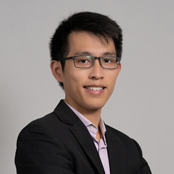
Professor Edmund C M TSE
Assistant Dean of Science (Outreach)
Faculty of Science, HKU
Welcome to the October issue of our e-newsletter.
Lately, the rapid evolution of artificial intelligence seems to dominate conversations across almost every industry. While the applications of AI are certainly broad, it is worth remembering what actually drives these breakthroughs: our fundamental sciences. The core scientific disciplines provide the essential architecture, logic, and materials that make new technologies possible. It is encouraging to see students sharing this perspective. More are showing a keen interest in both our basic science and interdisciplinary programmes, recognising that they naturally support one another.
This commitment to fundamental research is clearly reflected in our recent faculty achievements. I was delighted to see Professor Xuhua He elected as Vice-President of the International Mathematical Union (IMU), which is a significant milestone for the community. Similarly, Professor Wang Yao was recently recognised with a Certificate of Merit at the National Award for Excellence in Innovation. Adding to this momentum, Professor Juha Merilä and his team have secured a major RGC Area of Excellence funding to advance their crucial ecological research on the global wildlife trade.
Our colleagues are also continually translating these core scientific inquiries into practical solutions. In this issue, you will find updates on our work in healthcare, including the development of super-inert fluorescent dyes for surgical navigation and new methods using light to build 3D molecular structures for drug discovery. On the environmental side, our researchers are exploring how atmospheric dryness limits typhoon rainfall and examining the public health risks associated with marine heatwaves.
For those looking to begin their own academic journey, I warmly invite you to join our Information Day on 24 October. It is a good opportunity to see firsthand how a solid science foundation prepares students to address complex, real-world issues.
Whether we are running wave simulations to study dark matter or looking for new ways to support technological development, our priority is simply to give scientific creativity the room to thrive.
I wish you all a productive and fulfilling term ahead.
Warm regards,
Professor Edmund C M TSE
Assistant Dean (Outreach)
Faculty of Science, HKU